A bachelor's degree for starters, a master's for mains and a PhD for dessert?
Although it is hard to do, try not worry about the destination - at least not yet. It is true to say that you do not know who you will be then! And the world will be a different place too. The best thing to do is talk to people in the area you are interested in. It's a sure fire way to find out what floats your boat, and almost as importantly, what doesn't! So talk, talk, research and talk some more.
The route from undergraduate degree through to PhD might seem like it takes an eternity but it is not like that in reality. You might not take this route (there are many many alternatives), but if you do, it might involve travel, and you usually get paid (something). However the best part is that you are working on something you really care about. You are finding out new knowledge, and getting paid to do what you love. If you find a job you love, you may never work again! That is a real privilege.
The route from undergraduate degree through to PhD might seem like it takes an eternity but it is not like that in reality. You might not take this route (there are many many alternatives), but if you do, it might involve travel, and you usually get paid (something). However the best part is that you are working on something you really care about. You are finding out new knowledge, and getting paid to do what you love. If you find a job you love, you may never work again! That is a real privilege.
Animal Science is concerned with the science and practice of livestock production and an animal scientist applies principles of the biological, physical, and social sciences to addressing any issues which arise. The food industry is one of the largest and most important industries in Ireland.
As a result animal science directly connects the farm to human health via the food chain. The world is always going to need food, and the expanding population means food demand will grow. This is no mean feat and animal scientists have a critical role to devise innovative ways to meet this demand via expansion and improved efficiency. This must be achieved without compromising animal welfare standards and with adherence to sustainability goals.
Therefore developing a solid foundation in all aspects of animal science and emerging technologies is the first step to success in this critically important industry.
As a result animal science directly connects the farm to human health via the food chain. The world is always going to need food, and the expanding population means food demand will grow. This is no mean feat and animal scientists have a critical role to devise innovative ways to meet this demand via expansion and improved efficiency. This must be achieved without compromising animal welfare standards and with adherence to sustainability goals.
Therefore developing a solid foundation in all aspects of animal science and emerging technologies is the first step to success in this critically important industry.
The SCIENCE in Animal Science
When most people think about agricultural (or animal) science, they tend to firstly think of that first word. However it is worth considering the 'science' aspect of your study. What does it mean to be a scientist?
Well, quite a lot actually and some articles are linked below to help start you on your journey of discovery. A lot is theoretical but a lot is critically practical too.
Sustainability has to be built on science. Short-term solutions are no longer an option, and only perpetuate lurching from one crisis to another. To turn any idea into a solution - be that on a home farm, a food ingredient or as a business venture, a solid evidence base needs to be developed.
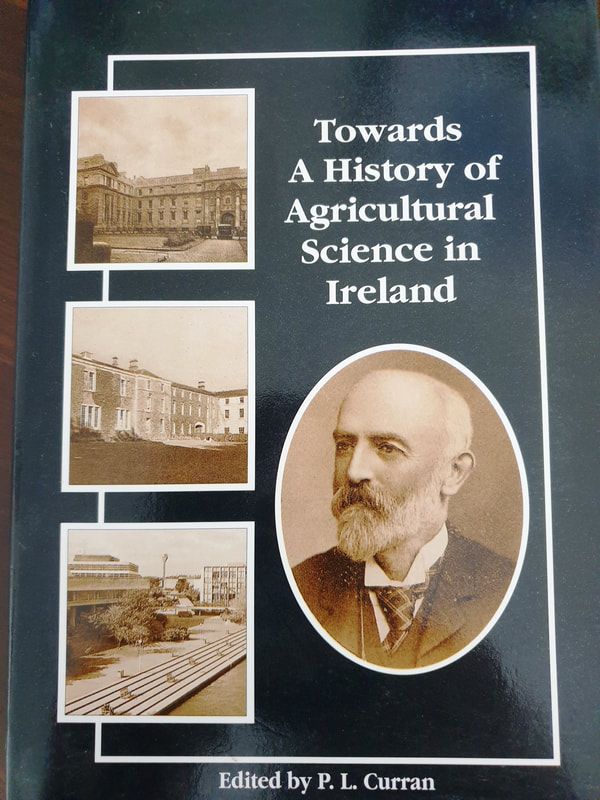
The history of agriculture yields amazing insights into how that evidence base was developed - usually by years of hard graft and occasionally by a touch of serendipity. Overcoming the current and future challenges of agriculture requires a vast array of complementary skill sets and curious minds. However, the one thing all successful solutions will have in common is their starting point is science-based evidence!
Developing a solid scientific foundation in any and all aspects of animal science is critical for making a real contribution to the sector.
Well, quite a lot actually and some articles are linked below to help start you on your journey of discovery. A lot is theoretical but a lot is critically practical too.
Sustainability has to be built on science. Short-term solutions are no longer an option, and only perpetuate lurching from one crisis to another. To turn any idea into a solution - be that on a home farm, a food ingredient or as a business venture, a solid evidence base needs to be developed.
The history of agriculture yields amazing insights into how that evidence base was developed - usually by years of hard graft and occasionally by a touch of serendipity. Overcoming the current and future challenges of agriculture requires a vast array of complementary skill sets and curious minds. However, the one thing all successful solutions will have in common is their starting point is science-based evidence!
Developing a solid scientific foundation in any and all aspects of animal science is critical for making a real contribution to the sector.
Technology drives evolution in agriculture

The animal science graduate has always had very diverse career options available to them, both in Ireland and internationally. However the immense pace of changes across society means that that diversity is growing even further.
Agriculture is an attractive, diverse and progressive industry connecting the tiniest seeds to the largest global pharmaceutical company. Food is now rightly seen as medicine and the consumer-driven agriculture is mainstream. Less and less people are responsible for producing our food but increasingly people are concerned with how that food is produced. Transparency, traceability, quality, environmental impact and animal welfare standards are all hot topics.
The agricultural web truly does connect all the ingredients of life from water to soil, and food to medicine. It is quite an exciting time to be in this sector as we as collectively address the reestablishment of equilibrium in agricultural and food systems. Regenerative agriculture and habitat farming of the future requires multi-disciplinary skills that captures the diversity and complexity of nature. Given the growing global demand for animal protein by an expanding human population, this sector looks set to only provide additional exciting opportunities for the prepared animal scientist!
Agriculture is an attractive, diverse and progressive industry connecting the tiniest seeds to the largest global pharmaceutical company. Food is now rightly seen as medicine and the consumer-driven agriculture is mainstream. Less and less people are responsible for producing our food but increasingly people are concerned with how that food is produced. Transparency, traceability, quality, environmental impact and animal welfare standards are all hot topics.
The agricultural web truly does connect all the ingredients of life from water to soil, and food to medicine. It is quite an exciting time to be in this sector as we as collectively address the reestablishment of equilibrium in agricultural and food systems. Regenerative agriculture and habitat farming of the future requires multi-disciplinary skills that captures the diversity and complexity of nature. Given the growing global demand for animal protein by an expanding human population, this sector looks set to only provide additional exciting opportunities for the prepared animal scientist!
Useful links